Farm-Fresh Hen Facts
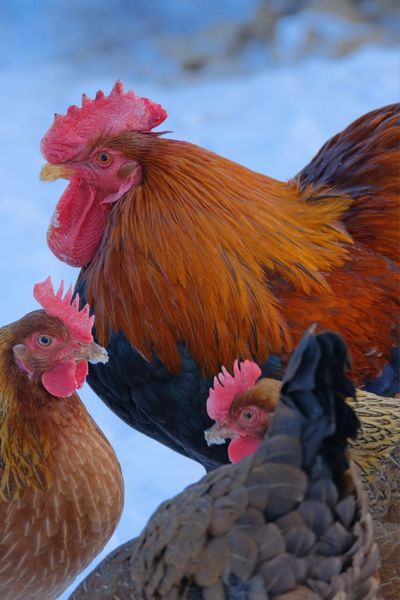
Hens are constantly communicating
Hens use a range of soft clucks, calls, and body language to stay coordinated as a flock. They signal when food is found, when it’s time to move, or when something doesn’t feel right. This constant communication helps keep the flock alert and organized. Roosters add louder, more distinctive calls - especially alarm signals - helping warn the flock of danger and direct them to safety.
Why we have mixed-breed flocks
At Farm the Golden Yolk we have a variety of breeds; Ameraucana, Barred Plymouth Rock, Easter Egger, Leghorn, Orpington, Rhode Island Red, Silver Laced Wyandotte, and mixes thereof.
A mixed-breed flock brings balance and resilience. Different breeds often have different strengths - some are excellent layers, others are more cold-hardy, or heat-tolerant. A diverse flock also tends to forage more efficiently; Because different breeds explore and forage differently, the flock uses the pasture more evenly instead of wearing down the same patches over and over. Our experience is that mixed-breed flocks adapt better to changing seasons and conditions than a single-breed flock. In that sense, they are not that different from us!
What is the value of having roosters?
Hens lay eggs as part of their natural cycle, whether a rooster is present or not—so why keep roosters on an egg farm? Roosters are quick to spot predators like foxes, raccoons, or hawks and will sound the alarm to warn the flock, often sending hens running for cover. Their presence adds an extra layer of awareness and protection, especially in our open pasture setting.
At Farm the Golden Yolk, we keep one or two roosters per flock of about 20 hens. Yes—roosters can live together peacefully when they are raised together and when there are enough hens to reduce competition.
How else to protect your flocks from predators
Protecting our flocks takes a layered approach. We use decoy owls to help confuse hawks and discourage them from lingering overhead. Our pasture is also shared with larger livestock—a rescue horse, goats, and alpacas—whose presence naturally deters many predators that prefer quieter, less active areas.
We rely on mobile coops, which allow us to move the flock closer to the house when predator activity increases, adding another level of security. Electric fencing provides a strong physical barrier to keep ground predators at a safe distance. In cases of heightened predator activity, we also humanely live-trap and relocate predators farther from the coops, which often discourages repeat visits.